· vocabulary-reading · 3 min read
How to Choose the Right English Books for Your Child's Reading Level
Choosing books that are too easy leads to boredom. Too hard leads to frustration. Finding the right level — challenging but achievable — is the key to building reading fluency and a genuine love of English.
簡単すぎる本を選ぶと退屈になる。難しすぎるとフラストレーションがたまる。チャレンジングでありながら達成可能な、適切なレベルを見つけることが、流暢な読解力と本物の英語への愛情を育てる鍵なのです。
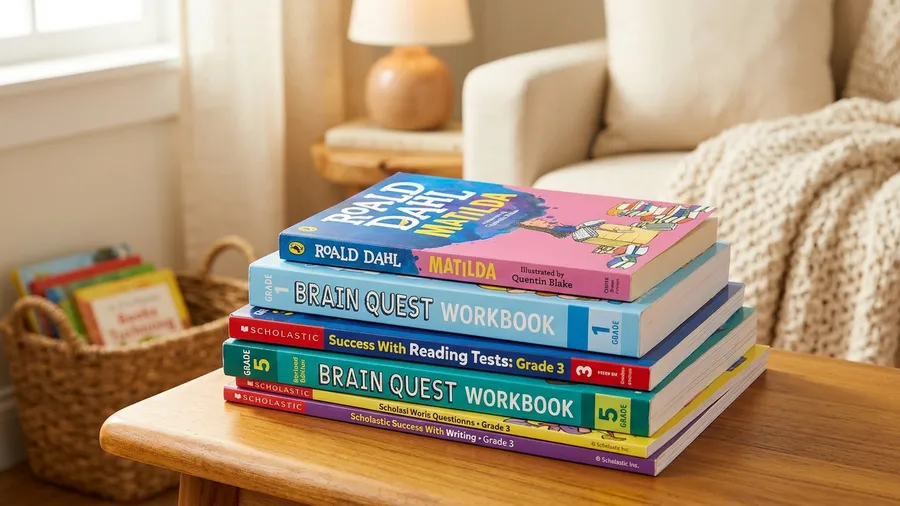
One of the most common questions parents ask is: “Which English books should my child read?” It sounds simple, but getting it right makes an enormous difference to both progress and motivation.
The problem is that most families either choose books that are too easy — which provides comfort but little growth — or books that are too hard — which leads to frustration and reluctance to read. The goal is to find books in what educators call the “instructional zone” — challenging enough to build new skills, but accessible enough to maintain confidence and enjoyment.
The Five-Finger Rule
A simple way to check if a book is at the right level is the five-finger rule:
- Open the book to a random page in the middle
- Begin reading
- Hold up one finger each time you encounter a word you do not know
- Count to the end of the page
Interpreting the result:
- 0–1 fingers: Too easy — choose something harder
- 2–3 fingers: Just right — this is your instructional zone
- 4–5 fingers: Borderline — manageable with support
- 5+ fingers: Too hard — choose something easier
This works well for children from around Grade 2 upwards who can self-report unknown words.
Understanding Reading Levels
English reading materials for children typically use one of several leveling systems:
Guided Reading Levels (A–Z): Used in many international schools and reading programs. Level A is early emergent; Level Z is advanced middle school.
Lexile Levels: A numerical measure of text complexity. 200–400L is roughly early elementary; 700–900L is middle school level.
AR (Accelerated Reader) Levels: Commonly used in American schools. Levels 1–3 are elementary; 4–6 are middle school.
Most graded reader series sold in Japan use their own internal level systems. Always check the publisher’s level guide before purchasing.
Recommended Series by Level
Beginning readers (ages 4–7):
- Dr. Seuss — rhythmic, repetitive, excellent for phonics
- Mo Willems (Elephant & Piggie) — simple conversational English, very engaging
- Eric Carle — beautiful illustrations, simple vocabulary
Early independent readers (ages 6–9):
- Oxford Reading Tree — structured, widely used in schools
- Usborne First Reading — good variety of topics
- I Can Read series — multiple levels, well-known characters
Chapter book readers (ages 8–12):
- Magic Tree House — adventure, accessible vocabulary, series format encourages continuation
- Geronimo Stilton — humorous, visual, popular with reluctant readers
- Diary of a Wimpy Kid — highly motivating for this age group
Upper elementary / junior high:
- Roald Dahl — rich vocabulary, imaginative plots
- National Geographic Kids Readers — non-fiction, excellent for academic vocabulary
- Goosebumps — popular with boys, builds reading stamina
Building a Reading Habit
Choosing the right book is only half the challenge. The other half is building consistency.
Set a regular time. Bedtime reading is the most sustainable habit for most families — it has a natural place in the daily routine and has a calming effect that makes children receptive.
Read together when possible. For younger children especially, reading aloud together — taking turns or reading to each other — dramatically increases engagement and comprehension.
Let children choose. Within the appropriate level range, giving children genuine choice over what they read significantly increases motivation and time spent reading voluntarily.
Track progress visibly. A simple reading log or chart on the wall helps children see their progress and builds a sense of achievement.
Not sure which books are right for your child’s level? Book a free consultation or visit our bookstore for curated recommendations.